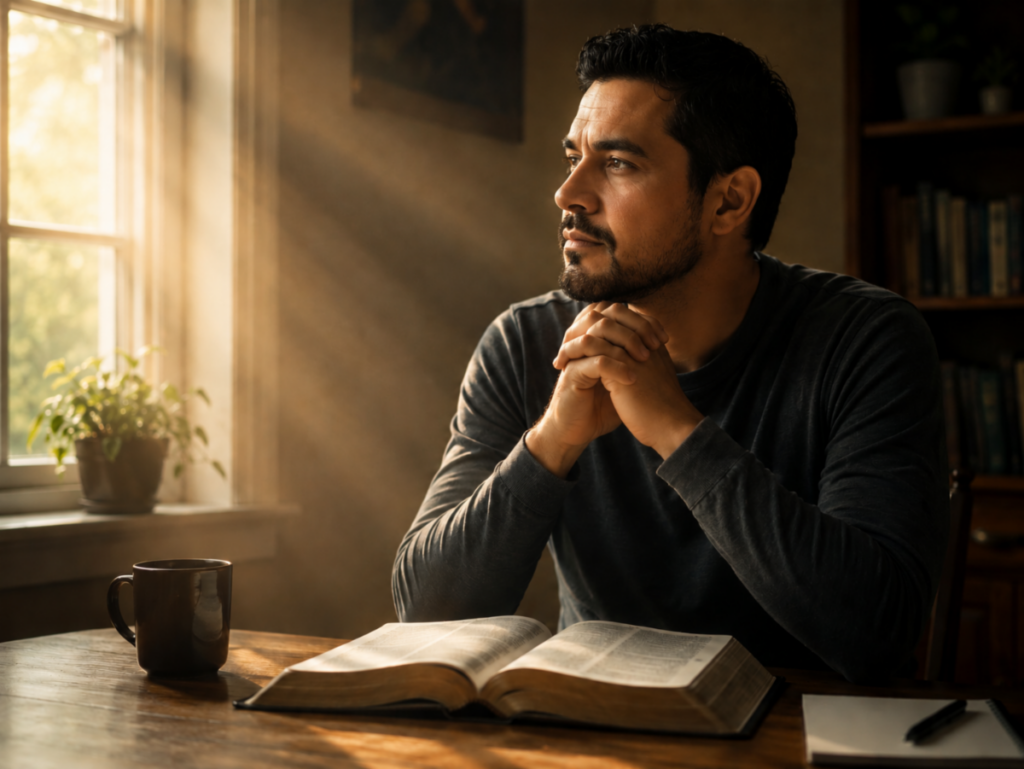
If you’ve ever felt like your doubts about God or faith disqualified you from exploring Christianity, you’re not alone. And according to Scripture, you’re not disqualified either.
Doubt is one of the most common barriers for people who are curious about faith but aren’t sure where to land. It’s also one of the topics the Bible addresses more honestly than most people expect. Some of the most significant figures in Scripture struggled openly with doubt, and their stories are recorded not as cautionary tales, but as part of a larger picture of what genuine faith looks like over time.
Can You Have Doubts and Still Have Faith?
Yes, and the Bible’s treatment of doubt is more compassionate than you might anticipate. In the Gospel of John, a disciple named Thomas refuses to believe in Jesus’ resurrection until he sees it for himself. Rather than dismissing him for this, Jesus shows up and invites Thomas to see. When Jesus tells Thomas to “stop doubting and believe,” it reads less like a rebuke in context and more like a direct, personal response to exactly where Thomas was.
Later in the New Testament, Jude 22 instructs believers to “be merciful to those who doubt,” a clear acknowledgment that doubt is part of the human experience of faith, not evidence that you’ve stepped outside it.
The Bible doesn’t present doubt as the opposite of faith. It presents doubt as something faith often moves through.
Doubt and Your Introduction to Christianity
Doubt takes different forms. Some people have unanswered questions: Did Jesus really exist? Does any of this make historical sense? Others carry painful life experiences that feel hard to reconcile with belief in a good God. Still others feel the pull of faith but can’t shake the sense that they haven’t earned the right to it yet.
At the Palm Beach Lakes church of Christ in Palm Beach Gardens, these are some of the most common questions we hear from people who are just beginning their introduction to Christianity. None of them are foreign to the Bible. The Psalms in particular are full of honest lament. “Why do you hide yourself?” and “How long, O Lord?” appear throughout, and they’re treated not as failures of faith, but as faith in motion.
If You’re Asking “Is Christianity for Me?” Doubt Doesn’t Disqualify You
If you’re wondering, “Is Christianity for me?” while holding onto genuine doubts, you’re actually in a very honest and searchable place. The Bible’s consistent invitation is not “come when you’re certain.” It’s closer to “come and see,” the same phrase Jesus uses when He first calls His disciples in John 1:39.
An introduction to Christianity doesn’t require you to arrive without questions. It simply requires a willingness to engage with them. Exploring what Jesus actually taught, what the resurrection accounts say, and what the Biblical narrative claims about God and humanity can move someone from abstract wondering to informed belief, or at minimum to a much clearer picture of what Christianity is actually asking of you.
How Do You Move Through Doubt?
The Bible doesn’t offer a three-step formula, but it does suggest a posture: keep asking, keep looking, and stay in community with others who are on the same search. Matthew 7:7 says, “Ask and it will be given to you; seek and you will find.” This is often read as a promise about prayer, but it applies just as well to the process of faith formation itself.
If you’ve been asking, “Is Christianity for me?” for a while, you don’t have to resolve that question alone. An introduction to the Christian faith isn’t a one-time event. It’s an ongoing conversation, and the doubts you’re carrying right now can be part of that conversation rather than a reason to avoid it.
If you’d like to explore these questions alongside others who are glad to sit with them, we’d love to connect. Reach out to the Palm Beach Lakes church of Christ in Palm Beach Gardens and let us know where you are on your journey.